As someone who suffers from many tick born infections for more than a dozen years now, I am often asked how I could have become so sick. The answer is multi faceted: 1) I moved to a perfect place that was a perfect storm for tick born disease. 2)Doctors tried to sweep my illnesses under the rug rather than treat them, leaving them to get worse and worse. 3)Once you get one of these tick born infections, your immune system often becomes impaired and unable to fight other infections.
I recently shared a post called a Perfect Storm of Ticks and in it, I said I’d return to the invasive plant issue. you can read that first post here: https://ticksareforthebirds.org/2024/02/27/a-perfect-storm-of-ticks/
so now, I’d like to go back to the invasive plants, and land use, that increase the risk of tick born disease.
In that first post I showed that small fragmented lots in the midst of larger woodlands are scientifically proven to greatly increase the risk of ticks, and a link for one of many studies. And I showed you this map from the State Park Service illustrating it beautifully. My home is in the fragments in the top center area of the map, almost touching the park.
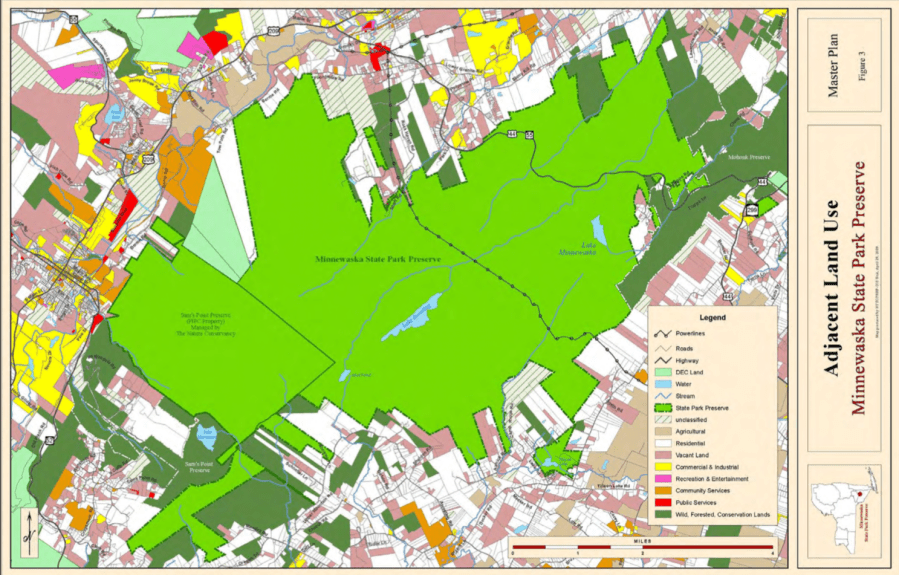
I also mentioned that my yard was full of invasive that increase the tick burden. let’s look at those invasives and the resulting increases.
Please note: last week, when speaking with my town officials about my illegal tick eating chickens, I was accused of being a liar about these invasives. As if the dozens of pieces of scientific evidence on this subject do not exist at all. I assured him that it is all scientific fact. I do not state things as fact unless I can back them up.
The invasives that are proven to increase the tick burden in a given area include Japanese barberry, black locust, garlic mustard and the wild rambling roses. All of my edge habitat when I arrived was Japanese barberry. We ripped all of it out on our own property. But unfortunately, the lots all around us remain full of thick awful masses of it.
https://www.trincoll.edu/…/lyme-disease-toting-ticks…
https://www.lymedisease.org/754
https://blogs.scientificamerican.com/…/barberry-bambi…
https://today.uconn.edu/…/controlling-japanese…
https://www.dcnr.pa.gov/goodnatured/pages/Article.aspx…
https://entomologytoday.org/…/the-5-year-plan-manage…
These studies all show that barberry increases the number of ticks in a given area, and that it increases risk of encountering infected ticks in these areas. It creates moist cool habitat with changed PH and invites more of the critters that live in it and bring more ticks and diseases making it more likely you”ll encounter infected ticks (white tailed deer, white footed mice, chipmunks, squirrels etc,) and it gives the ticks the moist damp environment they require for survival, protecting them from drying out. Ironically, the neighbors empty lot full of invasives is also where the predators (such as foxes) hide to ambush my tick eating chickens, making it so hard to keep the chickens safe from predators.
But, according to my town, it’s fine for all of my neighbors to keep lots full of invasive tick bringing species. But it isn’t fine for the same neighbors to hear a crowing rooster I have to keep me safe from the ticks their lots bring.
The next invasive on our list is black locust. This is another one I have lots of and have been trying to remove. But as invasives tend to be, they are very good at persisting. This one is actually hard to find a linkable study for you. But, I know I have seen many, and found them before. I also have a union college magazine article tucked away someplace that can surely be found someplace in some library. I do have the notes I made about the article many years ago. The article detailed a restoration project in NY taking a closed canopy forest created by invasive black locust trees and replacing it with native Savannah like vegetation and grasses, low shrubs, and the occasional pitch pine. The head researcher, a Dr, LoGiudice, explained that “blacklegged ticks aren’t animals of the forest. They cannot tolerate drying. The savannah like habitat is not ideal for them. they thrive instead in areas where soils have lots of organic matter and less sun light reaches the forest floor. Areas like those created by the locust. In conclusion, the researcher stated that they saw a 98% reduction in black legged ticks in restored areas, which she said really reduces a person’s chance of being bitten. Interestingly, the area around my home is a forest entirely made of these invasive plants, increasing the tick population, when it should be a savannah like habitat with native trees and shrubs where the ticks don’t thrive. My town offers neighbors no recourse for anyone seeking to stop tick invasions of their homes because of this invasive habitat. Not even chickens to help people stay safe, despite them being proven.
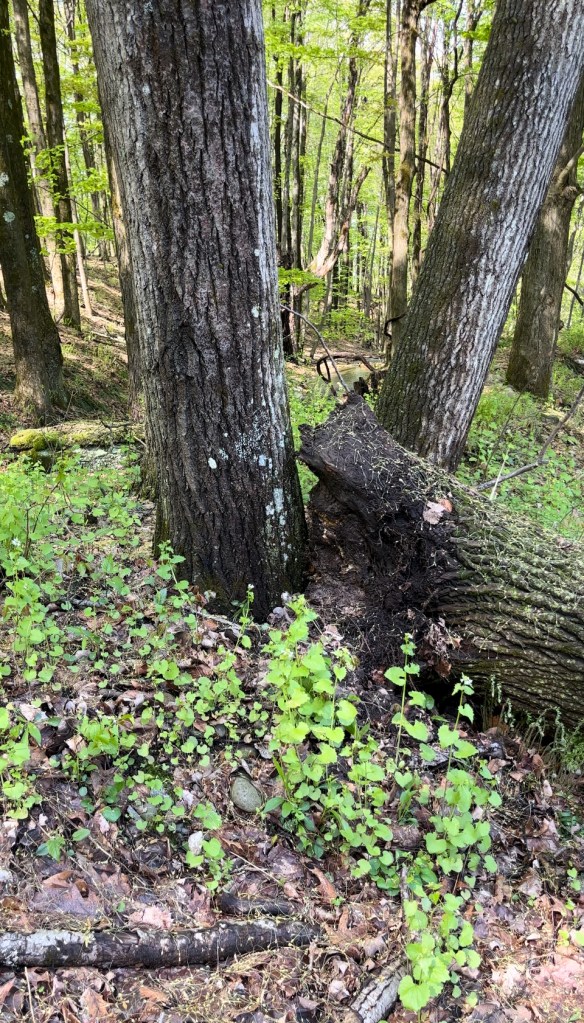
I hate all invasives. But I hate garlic mustard most of all. It fills the soil with germination inhibitors so other plants can’t grow, it kills mycellium, researchers say that because it tastes so nasty, deer will not eat it but will continue to eat the native plants around it. It’s quite clever in its invasiveness. I have been pulling it from the day I moved in almost 15 years ago. I found a great article from Nantucket outlining some of the research. You can find it here: https://www.nantucketconservation.org/garlic-mustard-friend-or-foe-in-the-battle-against-deer-ticks/
“the same garlicky chemicals that harm the mycorrhizal fungi (needed by plants and trees), also kill fungi that would infect and reduce populations of deer ticks. So, in fact, the spread of garlic mustard in your yard and local natural areas is NOT a way to reduce tick populations…it might be doing the opposite, actually. Scientists arrived at similar conclusions in different studies: Keesing et al. (2011) studied the effects of garlic mustard chemicals on fungi in a laboratory setting and reported the results in the journal Ecoscience, Volume 18(2); Vaicekonyte and Keesing (2012) conducted another experiment by removing garlic mustard in the field and reported their results in the journal Invasive Plant Science and Management Volume 5;” I finally seem to be getting a better handle on the garlic mustard here. But only after years of pulling and re-planting natives trying to balance the ecosystem back out. and it remains an annual battle to try and pull the stragglers. But again, there isn’t anything we can do about the garlic mustard in the neighboring lots adding yet another piece to the perfect storm of tick danger.
One has to gig a bit deeper to find the science on multiflora roses. In one study, more focused on urban than rural areas like mine for its final conclusions, researchers found that, “Understory structure provided by non-native, invasive shrubs appears to aggregate ticks and reservoir hosts, increasing opportunities for pathogen transmission.” you can find that study here: https://www.ncbi.nlm.nih.gov/pmc/articles/PMC5781316/ . On the vacant lot next door, the locust trees are covered in vines, including multiflora roses that grow 15 feet or taller in the air, and all of it tangled together in a big tick encouraging mass with japanese barberry under it all. And there is nothing I can do about this increased risk either.
Be nice if that town official who told me none of this was true would read this. It is they who have created the extreme risk for tick born disease and also they who allow no ways to mitigate the problem, preferring to ignore it instead. This has resulted in my being horribly ill with borrelia borgdorferei, borrelia myamotoi, anaplasmosis, rocky mountain spotted fever, typhus, babesia, bartonella, two different pneumoniaes, and several viruses that have reactivated and now won’t quit including EBV, CMV, HHV-6, Coxsackie, and Parvo b 19. These pathogens are all found in the ticks here on my property that bit me while I slept in my bed. And my rural country town won’t even allow my family to protect themselves with chickens, when they created the terrible situation in the first place.
In endemic states, in areas of perfect storms of tick habitat and illness risk, it should be illegal to keep people from responsibly, sustainably, and reasonably keeping chickens to help ease the tick burden on their families. Especially in rural areas like mine with less than 100 people per square mile. Again you are talking about environments proven to dramatically increase the risk in endemic states for multiple diseases, the most well known of which causes at least 476,000 new cases every year. This is an issue that impacts public health and the safety of the people greatly. And there is plenty of science to back me up.
Know a town official in the Town of Wawarsing? Please do share these posts with them…
Know a New York lawmaker? Please share this with them as well…
Know a reporter? Please share…..
 Ticks are for the Birds