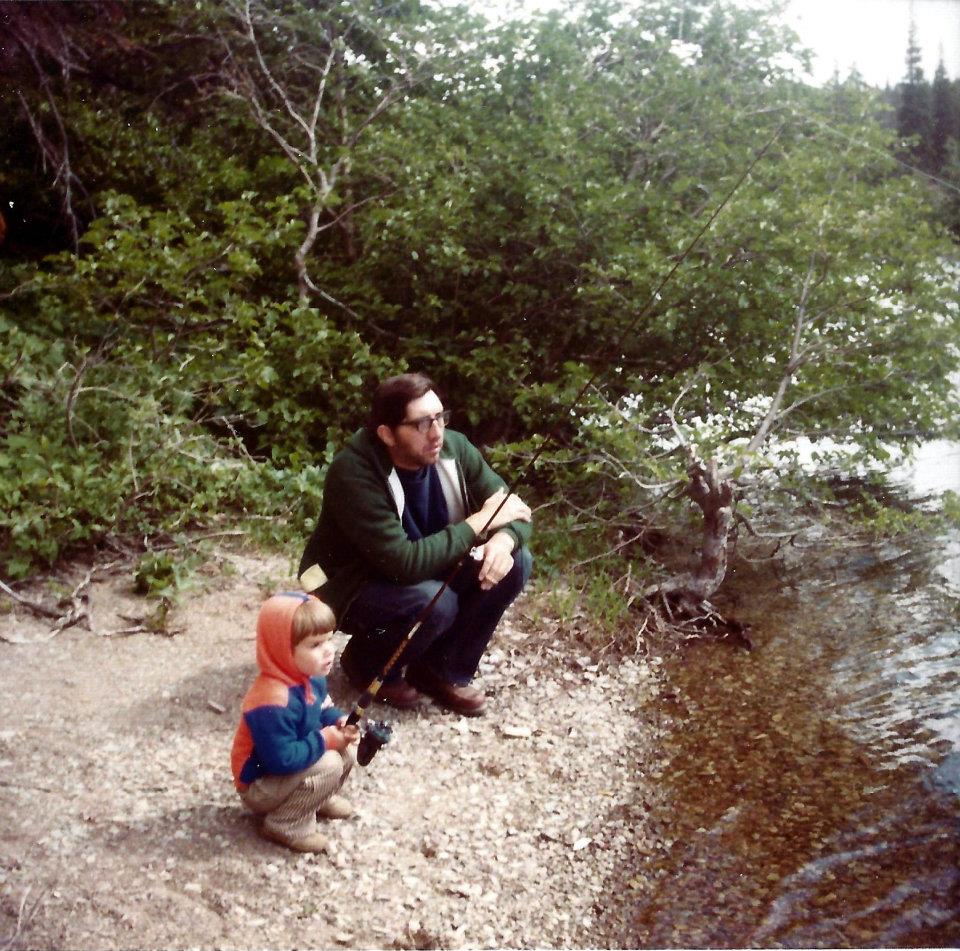
I live where I have always lived. In the country. I was virtually born camping, hiking, fishing, spending time outdoors. And those places are always where I found my happy place. This is me, at 3 years old on a bank someplace in Montana fishing with my father.
Though my family did some traveling, I’ve spent my entire life living in the very quiet, rural, agricultural Ulster County, NY. When I was growing up, you didn’t see many ticks here, but that began to change in the 90’s. And the ticks never stopped increasing. As an avid hiker in tick country, I learned to be vigilant, wear appropriate clothing, walk in “safer” places, always check for ticks, and to put clothes in the dryer and take a shower and do a tick check upon returning home. I did once find a wood tick on me in the 90’s, but it was quickly found and removed and no symptoms developed.
I lived, worked, and raised my children, always being careful and aware of the burden of ticks and the illnesses they could cause. It always felt like a gift to live in a county full of such an abundance of nature’s beauty, and a little caution to keep ticks at bay always seemed worth it to me. There was no place, of all the beautiful places nearby that I loved more than the Shawangunk Ridge, a place full of diversity, beauty, and history. for decades I visited often, as did my family. And we never got sick.

When I was given an opportunity to move with my family to the foothills of my favorite ridge, I thought it was an incredible gift…a blessing. After all, I’d grown up just 6 miles from this beautiful spot in the Shawangunk foothills, seasonally overlooking the quiet valley I grew up in and looking over it to the faces of the Catskills just beginning to stretch away to the north further upstate. I never dreamed I’d get to live right on it.
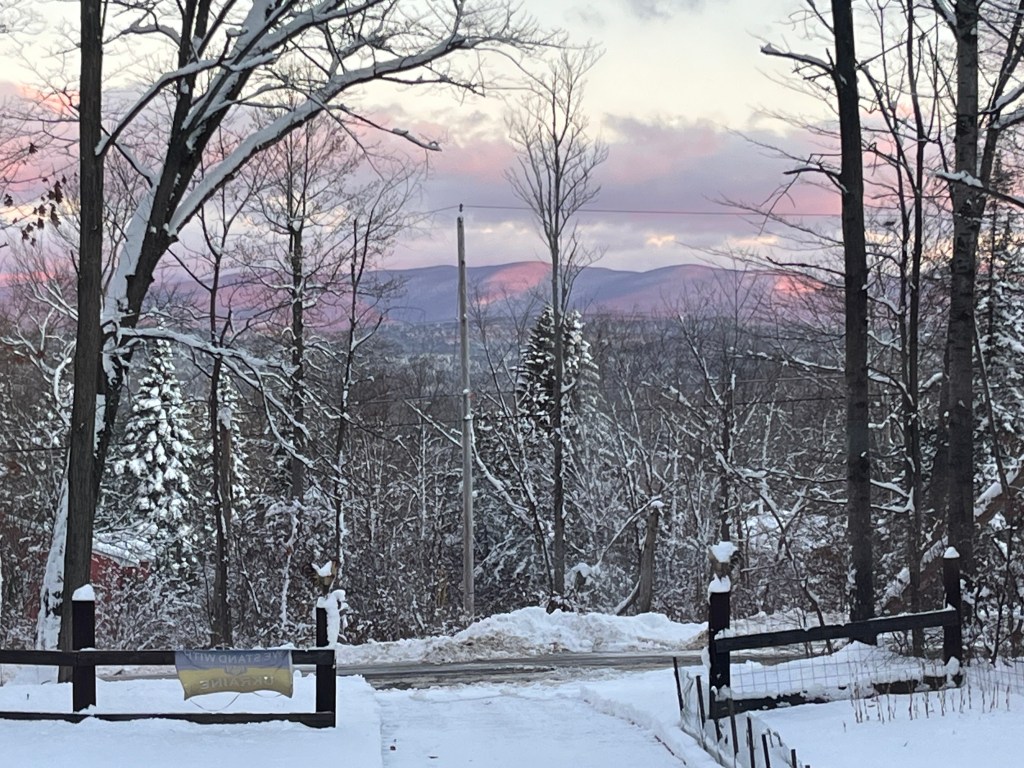
This was a dreamy place to raise kids. It had everything you could want. Clean air, a huge yard for playing sports, some of our favorite hiking trails just a short walk down the road, and of course, amazing birds and wildlife. We never even saw the train speeding right at us until it smacked us right in the face.
We quickly learned that we were totally unprepared for the tick burden waiting for us here. You didn’t have to walk into the woods to find a tick. They’d find you in the grass, they’d find you in the paved driveway, on the wooden porches. We even found them on multiple occasions crawling on us inside our cars or crawling around inside the car itself….not yet on our skin. it didn’t matter if the car windows were open or shut, they still got in. We continued to be vigilant in our tick prevention measures, but it did not help. We tried things like Diatamaceous Earth, and keeping the lawn really short, the leaves quickly raked. Nothing helped. and then it got worse. I was bitten on more days than I wasn’t. And my bites were always at night while I was sleeping. I would shower and check thoroughly before bed. And when I’d wake up in the morning, I’d have ticks stuck to me.
Our new dream home was quickly becoming a nightmare instead. I started doing more research. I discovered that small residential lots cut out of larger woods can be the worst types of tick habitat. Our lot was 1.5 acres and fell into the category of perfect tick habit by its size and by the size of the greater, larger forest surrounding it. You can find many studies explaining this, but my favorite, is actually fairly local, from Dutchess County, just across the river. In 2003, Felicia Keesing and her research team from Bard College did a study on habitat fragmentation, where they found astounding results:
“Fragments that were smaller than three acres had an average of three times as many total nymphs than the larger fragments did and seven times more infected nymphs. As many as 80% of the nymphs were infected in the smallest patches, the highest rate the researchers have seen.
“Our results suggest that efforts to reduce the risk of Lyme disease should be directed toward decreasing fragmentation of the deciduous forests of the northeastern United States into small patches, particularly in areas with a high incidence of Lyme disease,” say Keesing and her colleagues. “The creation of forest fragments of less than five acres should especially be avoided.”1
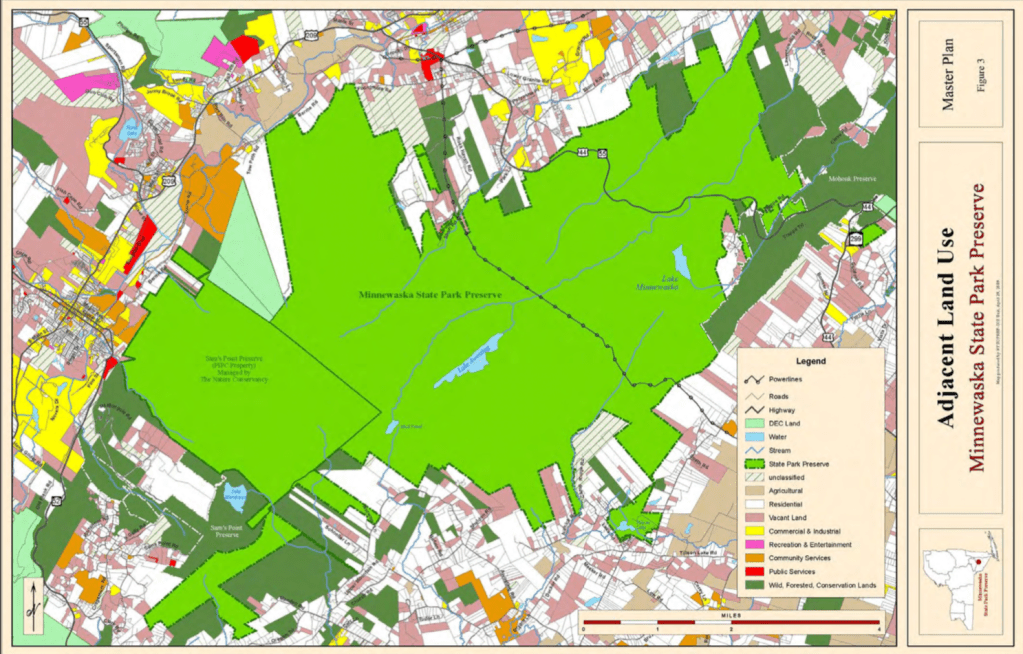
I also found that several invasive species which my property was full of and surrounded by increased tick burden. These include Japanese barberry, black locust, garlic Mustard and the wild rambling roses. (I’ll include references and more details on each of those this week and add those links here after.) Here is an excellent map from the State Park Service showing the land use around Minnewaska Park. You can see the color coded fragmentation all around the park. My home is in one of the sections denoted “unclassified” in the top section, but is highly fragmented and nearly touching the more than 24,000 acre park.
For about a year and a half, I kept getting frequent tick bites. Luckily, my ability to find and remove the ticks fairly quickly seemed to be saving me from getting sick. But I wanted to figure out how to stop them, and how to fix it so they didn’t keep coming back. I tried applying garlic spray, Diatamaceous Earth, and even expensive cedarwood sprays. I tried to remove all the invasives I could, and still, I kept getting bitten in my sleep, and there didn’t seem to be anything I could do about it. I remained baffled until one night, when I was reading a book before bed with a small book light, that something on the ceiling caught my attention. It was a deer tick crawling on my ceiling. Soon I began to find them all over walls and ceilings in the house. It began a long stretch of my life where I had to do the most unimaginable activity before bed…..search the walls and ceilings with a flashlight. I began to have such trauma and fear that sometimes, I’d even wake up during the night to check again.
In December of 2011, a year and a half after moving to my worst nightmare of a yard cleverly disguised as a dream, the nightmare got even worse when I became horrifically ill. I had no time to be sick. I had 3 kids, aged 8, 11, and 14, a job I adored, and was about to graduate from college in just 3 short weeks with a degree in Early Childhood Education. I was deep into student teaching, and we weren’t supposed to miss a single day. But, I suddenly was so ill I couldn’t function. I spent several days horrifically ill in my bed. With a terrible fever, sweats and chills, pain and weakness everywhere, and I couldn’t even hold water down without being sick. And I could hardly even manage to crawl to the bathroom right next door to be sick. This began a several year journey of mysterious and horrific ever increasing illness and an endless round of doctors. It took about 4 years and over 20 physicians before I would finally find that I had a massive soup of tick born diseases causing my illness.
At home, the extreme tick burden remained insanely high, and no matter how vigilant we tried to be or how many measured we tried to improve the situation, nothing changed. ticks were in control of our dream home. We decided we wanted to try raising chickens to eat the ticks. I googled the town laws and couldn’t find anything about poultry. I spoke to one of my bosses at work, who lived and kept chickens in my town, and he laughed at me and said of course it’s okay to have chickens in our little rural country town. Lots of our neigbors had chickens. we had a large garden shed we could convert to a coop. And it just so happened my preschoolers at work had raised some chickens and needed someone to take them home, so we brought them home, and got them settled in. Our kids started learning about chickens for 4H. and the most amazing thing of all happened. Every time we added a few more chickens, we found less and less ticks. Eventually, they stopped biting me in my sleep. I stopped having to search the walls with a flashlight before bed or in the middle of the night. Ultimately, it got to a point where we didn’t see ticks anymore here at home. We only had to worry when we left the house.
Even though I was still horrifically ill, and struggling to find doctors to handle my many tick born infections, at least we had finally solved the tick issue. and then, the Nightmare got so much worse. You can read the full details of the story here in a previous blog post: https://ticksareforthebirds.org/2021/06/07/the-tragic-tale-of-my-tick-eating-chickens/ We discovered we were not actually allowed to have chickens at all when a neighbor complained. This began a battle partially outlined in the linked post to fight the town law. The fight continues and is reborn today. And I am so tired of having to fight assinine, ridiculous laws.
First we were told no chickens at all. Then we were told we could only have 15 hens. 15 hens are not enough to eat all of the ticks in a 1.5 acre space so full of ticks. in addition, in predator country, you can’t have free range chickens without roosters, and expect to have anything but expensive fox or hawk food It is the rooster’s sole purpose to keep the hens safe, and make babies. We lost hens we’d had for years when we gave up our rooster and it became impossible to keep enough chickens to not have any ticks. you cant just go to the farm store and buy endless supplies of hens. You can buy chicks. Only at the right time of year, and then, those chicks have to be grown out for months before they become good bug eating free rangers in the yard. And faster than you can raise them, the predators, in this deep predatory forest, will always eat them faster.
Three Years ago, we purchased female only chicks from a mail order hatchery. this costs extra money. And, it turned out, it didnt even work. We got two roosters from what was supposed to be all female chicks. And then the following year, we purchased “premium pullets” that are supposed to be girls only from a local store. We got a couple of males that year too, so last year, we again purchased “premium pullets” from the local store. But, this time, we went a step further and got “black sex links premium pullets” which means that when they are borne, the girl chicks are one color and the boy chicks are another, so any confusion should be completely avoidable. But, instead, we got a whole bunch of little roosters.
last week, town officials came to tell me again, that the same neighbor who once complained about my geese honking because they thought a goose honk was a rooster crow have again complained. and now I am again being told I have to give up the roosters. But, without the roosters, my hens will all die faster than I can replace them, as always. And if you can’t buy all girls without getting boys from male order or local companies, how can you even replace the ones the hens eat at all?
The point of this entire long post, for anyone still reading is this: Towns in endemic rural areas should not be able to create these perfect storms of land use and regulations that stop people from being able to protect themselves. The CDC now estimated that there are about 470,000 cases of lyme in the US each year, and that at least 20% or more of those remain chronically ill with active infection. New York has been endemic for decades. This is an incredibly serious, life ruining illness, and you aren’t giving us any chance to survive in the country habitat that created the problem in the first place. a country habitat, that for my entire life, included farm sounds and backyard flocks. And in my town, it is the very people they say can’t have fowl who need them the most. Like felicia Keesing said, “in patches less than 5 acres, risk of human exposure to lyme disease was almost 5x greater than in larger forested areas.” and it isn’t just that there are more of them, its that they are also much more infected with lyme. (I don’t believe anyone has studied this for co infections yet) Says Keesing, “As many as 80% of the nymphs were infected in the smallest patches, the highest rate the researchers have seen.”
You can also read the proof that chickens are voracious tick eaters here in a former post: https://ticksareforthebirds.org/2021/03/18/proof-that-ticks-are-for-the-birds/
One last note, when I say my town is rural, I mean it is very very rural. I can only see neighboring houses in the winter, and even then they are quite far away. In fact, according to census data, my towns population density is only 97.2 people per square mile. Rural fragmented habitat cut from a larger forest full of diseased ticks just waiting to transmit them to you and your loved ones. Everything about this area says we need any and all measures we can implememt to lower the tick burden. Instead we implement measures to force people to stay in grave danger and continue to get sick. Due to poor land use, climate change, invasive species, and the very rural nature of this town and the tick danger we continue to face as we get more and more ticks and more and more sick people. This should be a matter of public health that people in rural towns can protect themselves. Instead it is a Nightmare.
 Ticks are for the Birds
1 Comment