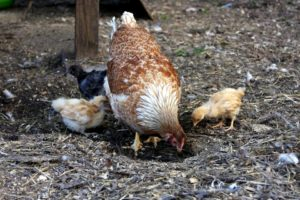
Unable to attend Town Meetings in person to bring up the issue of Chickens and tick control, and how dangerous it is for Towns to try and prohibit people from keeping them in rural areas hyper endemic for Lyme like mine, I have tried to write a persuasive letter proving the need for tick eating birds.
Finding the email addresses for the proper officials is proving hard, but I have found a few, and hopefully they will get where they need to go.
Please do keep lobbying your own towns for legislation to allow tick eating birds. Lives depend on it. Do feel free to cut and paste any parts you think could help you make you case, as I hope I have made mine.
Dear Town Officials,
I am writing as a concerned resident in response to the recent article in the Shawangunk Journal regarding chicken legislation. I am concerned that the Town of Wawarsing, a hot bed for tick activity, refuses to acknowledge the danger of its current restrictive poultry laws.
I had numerous discussions with the previous administration considering this matter, and had been assured that the situation would be remedied. Then, I read in the paper that it has not been remedied, and that the most important aspect of this issue is still not being considered in this matter.
This is endangering vast numbers of lives. Ticks are a tremendous issue in this town, and chickens are proven to be voracious and effective tick eaters. The tick danger is proven to be biggest on the smallest lots cut from larger expanses of woods.
But the Town of Wawarsing doesn’t allow anyone with less than 3 acres to keep a single bird. Please consider the very real science proving my statements below and please consider updating your chicken laws to allow for the public to protect itself from a very real threat: ticks.
Ulster County is considered hyperendemic for Lyme disease. The CDC currently estimates that there are at least 476,000 new cases of Lyme every year[1]. New York State currently accounts for a Third of the Nation’s Lyme Disease Cases, and Ulster County was ranked 8th in the entire nation in 2014[2]. As of 2016, Ulster County ranked 4th in the state in incidence per person with 194.9 cases per 100,000 people[3].
The Town of Wawarsing, in many neighborhoods including mine, is comprised of small plots of land cut from larger forests with abundant ticks and wildlife to help the ticks move around. Multiple studies have shown that the smaller the plot of land, the higher the risk. As Dr. Richard Ostfeld of the Cary Institute states, “tick populations can be very abundant in kind of suburban residential areas, more so than in pristine forests. When you have little woodlots, patches of forest with houses around, that’s like the worst case scenario for lyme risk.[4]”
In 2000, researcher Allan found that “efforts to manage the spread of lyme disease should be directed towards the prevention of the fragmentation of forests into patches of less than 1-2 ha., given that these patches appear particularly prone to high densities of infected nymphal blacklegged ticks”[5].
In 1988 researcher Falco asserted that “in the Northeastern US, the highest risk of exposure to the black legged tick is likely peri domestic, due to fragmentation of forest landscapes and other land use characteristics, as well as the intrusion of humans into prime habitat for black legged ticks and their hosts”[6]. Meaning most tick bites happen right in and around people’s homes. Dr Ostfeld agrees, stating, “More people get exposed to lyme disease in their neighborhoods than they do when they are hiking in the mountains of the Catskills, Adirondacks, or Shawangunks[7].”
The science on chickens and their ability to eat ticks has existed slightly longer than I have, with researcher Morel declaring in 1974 that “the chicken is the most important predatory bird which can be used for tick control[8].”
In 1991, Researcher Hassan, in South Africa allowed chickens to graze among tick infested cattle for just 30 minutes to an hour. The average number of ticks consumed ranged from 3 to 331 with an average of 81 ticks consumed per chicken[9].
In 1997, researcher Dreyer allowed chickens to graze among tick infested cattle in Kenya for 3 hours. They examined their stomach contents and found the chickens had consumed an average of 128 ticks in just 3 short hours[10].
In an informal 2015 study by Mother Earth News, 71% of households faced a problem with ticks before they had chickens, 78% of them managed to control or eliminate the blood sucking insects when they started keeping poultry, and 46% of them experienced a reduction of tick populations within a month after getting poultry[11].
I experienced exactly the same thing. I moved to the Town of Wawarsing, born and raised in Accord, seven miles away. But here, we were plagued by so many ticks that nothing worked. We couldn’t walk to our cars or sleep in our beds without getting ticks on us. We tried everything. I got horrifically sick. We decided to try chickens. We instantly saw a huge reduction in the number of ticks and the number of bites. We got more chickens. We had no ticks. This blissful tick free living at home went on for 4 years, and then one neighbor complained, and we discovered we were not allowed to have any chickens.
By now, I was being treated for multiple tick born illnesses I contracted before I had chickens, including neurological lyme, anaplasmosis, rocky mountain spotted fever, typhus, babesia, bartonella, and many more. We begged the former administration, and were told we could keep our chickens as long as we didn’t get more. A year later, we had less birds, and the same person complained again, and this time we were told we had to get rid of everything except 15 hens. And that a new law was being written to allow us to keep those 15 hens permanently. We tearfully gave up all but 15 hens, and in just a few days, all 15 of those hens were dead as fox food.
We had some of those hens for over 5 years before being forced to give up our roosters they didn’t last a week without a rooster. It was heartbreaking. And the ticks come back while we constantly battle to try and keep enough hens alive to protect us from the very dangerous tick born illnesses.
Roosters are key to flocks of free-range chickens in areas like this. Chickens can’t eat ticks unless they free range. They can’t free range without roosters to protect them from predators. It is the roosters’ job to protect the hens while they find bugs almost endlessly. Roosters warn them of predators, roosters keep them together, and roosters will sacrifice themselves to save their hens. Roosters, contrary to what you may believe, are actually not really any louder than other sounds you encounter in the country. For example, Human conversation 50 – 65 dB at one foot from source, 26 – 42 dB at 15 feet away.
Crowing Rooster 66-83 dB at one foot from source, 43 – 60 dB at 15 feet away.
Barking dog 60 – 110 dB at one foot from source, 37 – 87 dB at 15 feet away.
Automobile traffic 80 – 84 dB at one foot from source, 56 – 60 dB at 15 feet away.
Lawn mower 85-90 dB at one foot from source, 61 – 67 dB at 15 feet away.
Power tool (chain saw, leaf blower, weed whacker) 110 – 120 dB at one foot from source, 87 – 96 dB at 15 feet away[12]. They should be allowed, so people can effectively protect themselves from ticks, and they should be treated with the same type of nuisance sound rules as these other, louder, more common sounds.
In my case, I have been sick for 11 years with the tick born diseases I contracted in this town. The chickens are the only effective way I have to protect myself on my 1.5 acres, and they aren’t able to do the job unless a sustainable number is allowed to do so. People on smaller lots of land have just as much right to protect themselves from ticks as people with larger tracks of land. These laws must be changed, and I will continue fighting for that to happen to the best of my ability while crippled by tick born illness. I blog about it, I write lawmakers, the media…
I hope you will consider the very real danger you are creating by not allowing chickens on less than 3 acres, and address this very real issue.
I would be happy to answer questions or help in any way I can. My illness prevents me from attending meetings in person as I’d like.
Thank You for your Consideration,
Deborah Skogman
[1] https://www.cdc.gov/lyme/stats/humancases.html
[2] https://sites.newpaltz.edu/ticktalk/lyme-disease-a-harbinger-of-the-world-to-come/
[3] https://www.newyorkupstate.com/weather/2018/05/lyme_disease_new_york_state_deer_tick_rates.html
[4] https://www.caryinstitute.org/sites/default/files/public/reprints/Allan_2000_REU.pdf
[5] https://www.caryinstitute.org/sites/default/files/public/reprints/Allan_2000_REU.pdf
[6] https://onlinelibrary.wiley.com/doi/pdf/10.1111/jvec.12153
[7] https://www.dailyfreeman.com/news/local-news/peak-season-for-tick-activity-looms-in-the-hudson-valley/article_502df5b4-83be-11e9-9395-d754ee806b52.html
[8] https://www.sciencedirect.com/science/article/abs/pii/0304401792901715
[9] https://www.sciencedirect.com/science/article/abs/pii/030440179190129J
[10] https://www.researchgate.net/publication/51340446_Predation_of_livestock_ticks_by_chickens_as_a_tick-control_method_in_a_resource-poor_urban_environment
[11] https://www.motherearthnews.com/natural-health/how-to-get-rid-of-ticks-zm0z15aszkin
 Ticks are for the Birds